Enter Sinophone and cross-lingual literary history in France through Gao Xingjian's Paris-finished Soul Mountain, Qiu Miaojin's Montmartre epistolary Last Words from Montmartre, and François Cheng's Francophone Le Dit de Tianyi, then pair them with contemporary essays from Paris, Provence, and rural northern France to compare exilic composition, transcontinental letters, and everyday residence.
Automatically aggregated from narrative settings and writing residencies in work records; click to locate in the Spatial Atlas.
Paris →Narrative setting works · 4 / Writing residency works · 4Source ↗
The urban literary and everyday space of Paris, France; suburban residences, travels, and literary footsteps recounted in works are interpreted per source evidence rather than automatically equated with France as a whole or an author's place of writing.
The small commune of Tournehem-sur-la-Hem in Pas-de-Calais, northern France (spelled "Tournehem sur la hem" in the author's preface to Senlin li de Faguo shinian), recorded as a setting of everyday rural and culinary life without inferring where the entire manuscript was completed from the book's recipes or the author's years in France.
Works on this page · 6
All selected works
Explore each work’s connection to a place, with reading reasons and sources.
Completed in Paris in 1989 after Nobel laureate Gao Xingjian settled in France in 1987 (first published in Taipei by Linking in December 1990, originating from 1982–1983 notes across southwestern China). Read with the Swedish Academy's biographical record to understand its Paris completion context without mistaking a novel set across China's southern mountains and folk traditions for a depiction of France; cataloged from official biography and Taipei, Paris, and New York library records rather than a full-text reading.
Written in Montmartre in 1995, Qiu Miaojin's posthumous novel unfolds across twenty letters linking her Paris student apartment and walks along the Seine with love and memory in Taipei and Tokyo, pairing directly with her earlier Taipei-centered Notes of a Crocodile; read while keeping the epistolary narrator distinct from literal biography. Cataloged from the NYRB Classics edition page, LCCN 2013049765, and Lausanne/Paris library records rather than full-text reading of the Chinese or translated editions.
Written directly in French by Académie française member François Cheng (Albin Michel, 1998; winner of the Prix Femina) and translated into Chinese by Yang Nianxi, the novel follows Chinese painter Tianyi across twentieth-century turmoil into postwar Paris as an artist and bridge between poetic traditions, widening France's spectrum from Sinophone writing to Francophone translingual authorship. Cataloged from the Académie française dossier and LC/NBINet records for the 1998 French edition (Chinese translation ISBNs await physical inspection) without full-text reading.
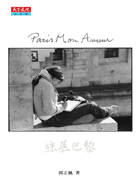
Start with the publisher's public excerpt of the title essay "Home in Paris" to see how unfamiliarity turns into everyday routine through greetings, moving house, and work, then look up "Canal Saint-Martin" in the table of contents. Based on reading the preface, title-essay excerpt, and table of contents retrieved from the publisher's site without having read the canal essay or the full book; essays set in other cities are not grouped wholesale under Paris.
Start with internship and language experiences in the publisher's public preface, then read the newspaper excerpt "Luc, Nathalie, Roussillon (Part 2)" to enter Provence through cycling fatigue, exchanges among companions, and finding lodging. Based on reading these public texts and the table of contents rather than the full book; textual variants between later webpages and the 2004 print edition await verification, and excerpts are not labeled as full book texts.
Short read on life beyond Paris: start with the public foreword to the Winter–Spring volume, observing seasonal rhythms in rural northern France through preserving food, visiting neighbors, and the colors of the table. Assessed from the foreword and table of contents retrieved from the publisher's site without a full reading; approach this cookbook through its narrative of everyday life rather than taking personal experience as nationwide custom or tested culinary conclusions.
The Swedish Academy's official biographical notice traces Gao Xingjian's trajectory from experimental drama in Beijing and southwestern travels to settling in Paris in 1987, completing Soul Mountain, and writing plays in French; useful framing context rather than an excerpt or translation of the novel itself.
The Académie française's official Seat 34 dossier documents François Cheng's arrival in France in late 1948, his work on Chinese poetics and painting, his 1998 Prix Femina for Le Dit de Tianyi, and his reception speeches; institutional French documentation rather than the novel text.
The book page provides the table of contents, the preface "The Simple Life of an Artist's Wife," and an excerpt from the title essay, highlighting how the narrator organizes work and daily life; it is not the full text of the book, nor is it grounds to infer a separate French-language edition.
Enters through language, career choices, and daily pace during a three-month internship in Paris. Although the product page lists a 2013 item, the preface is dated early spring 2004; read it as a public excerpt rather than the full text of the 2004 print edition.
A 2005 newspaper webpage featuring a passage on cycling through Roussillon, getting along with companions, and looking for lodging, noted at the close as excerpted from this book; labeled "Part 2," it represents neither the complete chapter nor the full volume, and businesses or routes mentioned are not a current travel guide.
The publisher's book page provides the foreword and table of contents—look first for passages on Tournehem-sur-la-Hem, neighborhood ties, and seasonal tables; verified via cached publisher search records as direct requests may time out. It is not the full text of the book, and the Summer–Autumn volume is cataloged separately as a distinct work.
Selections for France now span two complementary strands: major literary and cross-lingual milestones—Gao Xingjian's Soul Mountain (completed in Paris), Qiu Miaojin's Paris-written epistolary novel Last Words from Montmartre linking Paris with Taipei and Tokyo, and François Cheng's Francophone Le Dit de Tianyi alongside Chinese translations—paired with contemporary essays by Xi Ling, Kuo Cheng-pei, and Chen Ziliang across Paris, Provence, and rural northern France. Major works are cataloged from institutional dossiers, publisher records, and library holdings, while essays mark public excerpts apart from full volumes; these six works do not stand for all of France or all Sinophone communities there.
Reference points indicate location, not the extent of this selection.