Places and regions AI-assisted curation · Item-level sources
Japan
Trace a historical arc from modern Chinese students in Nagoya and Sendai, Wu Zhuoliu's colonial-era classic Orphan of Asia, and transnational films The Go Master and Song of the Exile through postwar Kobe Overseas Chinese mystery fiction to contemporary translingual novels, Ryukyu maritime poetics scholarship, Kyoto and Tokyo essays, and 1990s-to-2025 accounts of Chinese student-workers and new migrants in Japan.
Browse selected works Recorded works: 18
Location reference · Map data Natural Earth
Literary landscapes and places in this region
Derived from recorded factsAutomatically aggregated from narrative settings and writing residencies in work records; click to locate in the Spatial Atlas.
-
The urban literary space of Tokyo, Japan; historical neighborhoods and present-day administrative boundaries are understood separately, without inferring narrative settings from a place of publication or an author's current residence.
-
Country-scale literary landscape of Japan; retained at this broader scale when specific cities are unverified, without inferring narrative settings or places of composition from a publisher's location or an author's residence abroad.
-
The urban literary and everyday space of Kyoto, Japan; neither expanded by default to all of Kyoto Prefecture nor used to infer a work's place of composition from an author's study abroad, academic appointment, or travel.
-
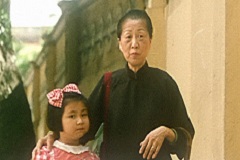
The city and hot-spring town of Beppu in Ōita Prefecture, Kyushu, Japan, as a cross-sea space of memory and return (as in the mother-daughter homecoming sequence of Ann Hui's Song of the Exile); semi-autobiographical film or literary scenes are not equated with local history or literal biography.
-
The port-city urban and Overseas Chinese community literary space of Kobe, Hyōgo Prefecture, Japan—including Kaigandōri and Nankinmachi neighborhoods (as in the postwar Kobe Chinatown setting of Chin Shunshin's Karekusa no ne); historical periods and fictional plots are understood in context without equating them with present-day addresses or all Chinese residents in Japan.
-
The urban and modern campus literary landscape of Nagoya, Aichi Prefecture, Japan (such as the study-abroad setting of Yu Dafu's "Sinking," modeled on the Eighth Higher School in Nagoya as "N City"); literary interiority and fictional plots are not equated with institutional archives or literal diary entries.
-
Refers to the premodern Ryukyu Kingdom and East Asian investiture maritime routes examined in scholarship such as Maritime Poetry Road; neither retroactively equated with modern Okinawa Prefecture's administrative boundaries nor conflated with the fictional Island in An Island Where Red Spider Lilies Bloom.
-
The urban and study-abroad literary space of Sendai in Miyagi Prefecture, Japan (as in Lu Xun's "Mr. Fujino," recounting his medical-academy years and lodgings); schools, quarters, and remembered periods are understood within each work's context without conflating them with an author's later place of writing.
-
The urban and cross-sea residential writing space of Fukuoka, Japan; used to mark the Kyushu base where Akira Higashiyama (Wang Zhenxu) resides and wrote Ryu as well as the novel's post-migration epilogue, keeping the place of composition distinct from its primary 1975 Taipei setting.
A few starting points
Guides and recorded reading links come first; ties keep selection order. This is not a quality ranking.
Works on this page · 18
All selected works
Explore each work’s connection to a place, with reading reasons and sources.
Depicts the place
沉淪
A starting point for modern Chinese lyrical fiction from Japan: begin with the Nagoya high school and countryside passages in the title story "Sinking," pairing them with Lu Xun's "Mr. Fujino" to contrast isolation and bodily anxiety among Chinese students in Japan. Recommended from the 50%-proofread Wikisource transcription and bibliographic records of the 1921 Taidong first edition without reading all three stories in full, pending collation against print copies and without reading the protagonist as authorial diary.

Image information

Media via Wikimedia Commons; see file page for license and attribution.
Automatically matched from work source; image not reviewed
Depicts the place
藤野先生
Sendai student-memoir short read: trace the move from Tokyo to Sendai, Professor Fujino's corrected lecture notes, and the anonymous-letter episode to see how retrospective memory organizes the past. Read via the public Chinese Wikisource transcription marked 65% proofread, pending word-for-word collation against first periodical publication or authoritative print editions; the "October 12" dateline at the end is not the first publication date, nor does the essay alone adjudicate historical context.
Japanese · Paperback · 2022-09-15 · 岩波書店
Image information
Cover via Google Books · ISBN 9784006023461. Image rights remain with their holders; this service link is not permission to mirror the image.
Automatically matched by ISBN; image not reviewed
Depicts the place
亞細亞的孤兒
Version title: Orphan of Asia
Classic Japanese-language novel of East Asian colonial identity: follow Hu Taiming across Japanese-ruled Taiwan, student life in Tokyo, and wartime mainland China as suspicion from every side exposes fractures of imperial subjecthood. Catalogs the 1946 four-part Taipei first edition (originally titled Hu Zhiming), the 1956 Tokyo retitled lineage, Fu Enrong's abridged Chinese translation, Huang Yuyan's full retranslation, and Ioannis Mentzas's Columbia English translation separately; recommended from Iwanami and library records without reading any edition in full, and without treating fiction as literal authorial biography.

Japanese · Film print · 2006-10 · New York Film Festival
Image information
Preview image via letterboxd.com; rights remain with their holders.
Automatically matched from work source; image not reviewed
Depicts the place
吳清源
Transnational biographical cinema on Shōwa Go master Wu Qingyuan (Go Seigen): directed by Tian Zhuangzhuang and written by Ah Cheng, the film contemplates Wu's life in Tokyo from his 1928 apprenticeship and "New Fuseki" revolution through wartime statelessness, Jikōson religious devotion, and postwar ten-game matches—pairing with Orphan of Asia and Karekusa no ne across prewar and postwar eras.without substituting dramatic condensation for historical Go archives.
Chinese · Film print · 1990-05-15 · 坎城影展
Image information
Preview image via filmarchive.gov.hk; rights remain with their holders.
Automatically matched from work source; image not reviewed
Depicts the place
客途秋恨
Postwar Sino-Japanese family homecoming across London, Hong Kong, Macau, and Beppu in Kyushu: Ann Hui follows a London-educated daughter accompanying her Japanese mother back to her Kyushu hot-spring hometown, bringing Cantonese–Japanese estrangement, postwar repatriation trauma, and maternal memory onto screen. Semi-autobiographical drama does not equate to item-by-item biographical fact.
Depicts the place
枯草の根
Postwar Kobe veteran Overseas Chinese novel: entering the Edogawa Ranpo Prize-winning mystery through Kobe's port neighborhoods and community ties illuminates postwar Overseas Chinese social worlds distinct from contemporary migration narratives. Records the 1961 Japanese first-edition catalog entry, while the 1996 Traditional Chinese translation lead remains pending verification.
Cross-regional context
流
Naoki Prize novel written in Fukuoka and primarily set in 1975 Taipei rather than Japan: looking back across civil-war dislocation and Taiwan-Japan ties, it pairs with Hitorimai and Raifuku no Ie on generational memory and Japanese-language authorship. The 2015 Japanese edition and Wang Yunjie's 2016 Traditional Chinese translation are cataloged separately; recommended from bibliographic and literary records without reading either edition in full.
Japanese · print · 2016-09 · 白水社
Image information
Cover via Google Books · ISBN 9784560072080. Image rights remain with their holders; this service link is not permission to mirror the image.
Automatically matched by ISBN; image not reviewed
Depicts the place
来福の家
Japan-raised generation bilingual family fiction: approaching Tokyo household speech braided from Taiwanese Hokkien, Mandarin, and Japanese offers a three-way comparison with Higashiyama Akira's historical memory and Lee Kotomi's Taiwan-born perspective. The 2011 Japanese edition and Guo Fanjia's 2014 Traditional Chinese translation are cataloged separately; recommended from bibliographic and library records without reading either edition in full.

Image information
Cover via Open Library · 講談社, ISBN 9784062209519. Image rights remain with their holders; this service link is not an open licence or permission to mirror the image.
Sourced; not human-verified
Depicts the place
獨舞
Migration and queer intimacy between Taiwan and Tokyo—ideal to read alongside Notes of a Crocodile and to contrast with Higashiyama Akira's Ryu and Wen Yourou's Raifuku no Ie across generations and first-language positions. The Japanese original and the author's Chinese self-translation (which incorporates stylistic adaptations and contextual notes) are cataloged separately; recommended from author and edition notes without reading either language text in full, and without treating characters as authorial autobiography.
Japanese · Hardcover · 2021-06-25 · 文藝春秋
Image information
Cover via Google Books · 文藝春秋, ISBN 9784163913902. Image rights remain with their holders; this service link is not an open licence or permission to mirror the image.
Sourced; not human-verified
Cross-regional context
彼岸花盛開之島
Translingual allegory extension: start with the author's Chinese afterword explaining the novel's three constructed languages and self-translation strategy before comparing linguistic registers in the narrative. While drawing inspiration from Ryukyuan religion and Yonaguni legends, its imaginary island does not map directly onto real-world Japan. Recommended from the afterword and publisher descriptions without reading the novel in full in either language; Japanese original and Chinese self-translation are cataloged separately.
Traditional Chinese · Paperback · 2024-10 · 國立臺灣大學出版中心
Image information
Cover via Google Books · ISBN 9789863508953. Image rights remain with their holders; this service link is not permission to mirror the image.
Automatically matched by ISBN; image not reviewed
Studies the place
海國詩路:東亞航道與南洋風土
Scholarly pairing on Ryukyu investiture envoy Sinitic poetry and East Asian maritime routes: start with Part I ("Island Horizons") examining eighteenth- and nineteenth-century Qing envoys' sea-voyage Sinitic verse and island mesology in Ryukyu, reading its historical seascape alongside Lee Kotomi's Ryukyu- and Yonaguni-inspired allegory in The Island Where Red Spider Lilies Bloom. Recommended from National Taiwan University Press contents and blurbs without reading the monograph in full; premodern Ryukyu Kingdom waters are not conflated with modern Okinawa prefectural boundaries.
Depicts the place
東京上流
Tokyo literary-walk selection: pick a modern Japanese writer's neighborhood in Arai Hifumi's Chinese-language essays to compare the city in literature with the author's on-site walks. Currently records the 2005 Titan Publishing print lead pending further verification of exact dates and carriers; recommended from publisher descriptions and library catalog records without reading the book in full.
Chinese · 2024-05 · 世界图书出版北京分公司
Image information
Cover via Google Books · ISBN 9787523201077. Image rights remain with their holders; this service link is not permission to mirror the image.
Automatically matched by ISBN; image not reviewed
Cross-regional context
我在中日文的交汇处
Start with observations of Kobe students staging a Chinese play in "Opening the Door to Bilingualism," then select "Everyday Life with Cats" or "Translation as Cross-Culture" from the table of contents. Compiled after reading the foreword and contents without reading the book in full; the exact order of composition and translation for each Chinese–Japanese bilingual essay remains pending verification.
Chinese · Paperback · 2023-08-30 · 三民書局
Image information
Cover via Google Books · 三民書局, ISBN 9789571476582. Image rights remain with their holders; this service link is not an open licence or permission to mirror the image.
Sourced; not human-verified
Depicts the place
京都一年
Kyoto everyday-life selection: start with the public excerpt of "Three Kyoto Women I Knew," attending to restaurant work, theatrical pursuits, and cross-cultural friendship. Currently records the 2023 fourth print edition while earlier printings and electronic formats remain pending verification; recommended from tables of contents and excerpts without reading the book in full, and venues described do not reflect current business operations.

Chinese · Hardcover · 2015-08 · 中华书局
Image information
Preview image via megbook.com.tw; rights remain with their holders.
Automatically matched from work source; image not reviewed
Depicts the place
京都古书店风景
Kyoto book-hunting selection: start with the public excerpt of "From 93 Lanman Hutong to the Old Bookshop Wife: Tsuda Shoten" to enter through shopkeepers, antiquarian books, and cross-border circulation before comparing another bookshop from the contents.addresses and shop operations reflect the time of writing rather than a current directory.

Image information
Preview image via megbook.com.tw; rights remain with their holders.
Automatically matched from work source; image not reviewed
Depicts the place
有鹿来
Kyoto everyday-life selection: follow the revised edition's contents starting with "On the Way to Campus" and "Shunkindō Bookstore," then read the new preface on memory and changing places. Both the 2016 edition and the revised 2022 edition are cataloged; recommended from tables of contents, preface excerpts, and author interviews without reading either edition in full, and updates noted in the revised preface do not represent present-day conditions.

Chinese · Audiovisual · 1999-11 · 北京电视台
Image information
Preview image via daifutv.com; rights remain with their holders.
Automatically matched from work source; image not reviewed
Depicts the place
我们的留学生活——在日本的日子
Landmark television documentary series on the 1980s–90s Chinese student and labor wave in Japan: filmed over more than a decade by Zhang Liling's team—including The Little Overseas Students and Living Through Tears—it chronicles post-Reform Chinese students and workers juggling language schools, exhausting Tokyo jobs, and family separation, offering key "new overseas Chinese" historical context alongside 2025's Runri and Kei Nakajima's reportage. Profiled individuals do not represent all Chinese in Japan, and third-party behind-the-scenes books are kept distinct from the series itself.
Japanese · 2025-02-04 · 東洋経済新報社
Image information
Cover via Google Books · ISBN 9784492224243. Image rights remain with their holders; this service link is not permission to mirror the image.
Automatically matched by ISBN; image not reviewed
Studies the place
潤日(ルンリィー):日本へ大脱出する中国人富裕層を追う
Contemporary migration and settlement selection: start with the public Chapter 1 excerpt on choosing Japan and comparisons with earlier "new overseas Chinese" cohorts before turning via the table of contents to housing, education, or middle-class life; the Japanese original and Hsu Yu-wen's Chinese translation are cataloged separately.interviewed cases and authorial judgments do not represent all Chinese residents in Japan, nor do visa and real-estate descriptions serve as current practical guidance.
Further reading
時が滲む朝 — 楊逸 ↗
Akutagawa Prize-winning Japanese novel tracing translingual experience through Chinese study and life in Japan around the late twentieth century, pairing well with Wen Yourou's Raifuku no Ie and Lee Kotomi's Hitorimai. No authorized standalone Chinese edition is currently confirmed; listed as Japanese further reading from publisher catalog notes without reading the full text.
日本の「中国人」社会 — 中島恵 ↗
Japanese journalistic reportage on settled Chinese communities in Japan; browse the table of contents on community networks, education, and reasons for staying as a 2010s bridge between the 1990s documentary series Our Life in Japan and 2025's Runri. No Chinese translation has been confirmed; compiled from publisher blurbs and contents without reading the body text, neither treating 2018 figures as current statistics nor assuming direct response links among these works.
珈琲時光 — 侯孝賢 ↗
Hou Hsiao-hsien's 2003 Tokyo-shot Japanese-language feature (co-written with Chu T'ien-wen for Ozu Yasujirō's centenary), following researcher Yōko across Jinbōchō secondhand bookshops and Tokyo commuter lines as she traces Taiwanese-born composer Jiang Wenye (Koh Bunya, 1910–1983)—a resonant visual counterpoint to The Go Master and Kyoto bookshop essays. Produced entirely in Japanese and listed here as cross-cultural further viewing from archival metadata without viewing the full film.
中国作家网 · 苏枕书访谈:漫游于京都日常与故纸书香之间 ↗
The author distinguishes her thematic study Scenes of Kyoto's Secondhand Bookshops, her everyday essay collection You Lu Lai, and her standalone volume Chunshan Hao; read her account of these distinct approaches before comparing the two cataloged Kyoto books. Reflecting observations from 2020, this note neither conflates Chunshan Hao with a revised edition of You Lu Lai nor automatically indexes all works by the author.
維基文庫 · 魯迅〈藤野先生〉 ↗
User-maintained full text on Chinese Wikisource, accessible starting from the anatomy lecture-note episode; marked 65% proofread, with first-periodical and print variants still awaiting collation. Online script conversion does not establish the character system of the original publication, and this link points solely to the current Wikisource transcription rather than a verified print edition.
Scope of this selection
- Country scope
Current selections span Tokyo, Nagoya, Sendai, Kobe, Kyoto, Fukuoka, Beppu in Kyushu, historical Ryukyu waters, and cross-sea ties with Taipei and Hong Kong—bringing together modern Chinese students' writing, colonial-era identity fiction, Shōwa and postwar transnational cinema, veteran Overseas Chinese mystery fiction, 1980s–90s student-worker television documentary, contemporary translingual Japanese novels and self-translations, maritime Sinitic poetics scholarship, and community reportage; each entry specifies period, setting, and medium boundaries without generalizing across all Chinese residents in Japan.
Reference points indicate location, not the extent of this selection.
Editor: sinophone.world · · Selection record