Begin with Xiao Hong's twin Northeastern masterpieces—The Field of Life and Death set outside Harbin around 1931 and Tales of Hulan River, completed in Hong Kong exile in 1940 to recall childhood in Hulan County—paired with Miya Qiong Xie's comparative study of four-language Manchurian literatures, then move into post-industrial Shenyang's Worker's Village in Ban Yu's Winter Swimming and Lulu Wang's Changchun radio memoir and film The Farewell.
Urban literary space of Shenyang in Liaoning, China (including industrial neighborhoods such as Tiexi Worker's Village); distinguishes modern "Mukden / Fengtian" historical contexts from late-twentieth-century narratives of industrial restructuring without treating fictional plots as municipal history or standing for all workers' lives.
Urban and familial memory space of Changchun in Jilin, China; distinguishes colonial-era "Hsinking" historical contexts from contemporary Changchun city life, recorded only where works or program archives explicitly attest a Changchun setting without generalizing individual homecoming stories into local social norms.
Historical and modern literary space of Harbin and its surrounding rural outskirts in Heilongjiang, China; early-twentieth-century railway urbanism, 1930s wartime village settings, and contemporary urban memory are bounded per source evidence without projecting modern municipal boundaries anachronistically onto Republican-era neighboring counties.
Historical literary space of Hulan County town (including the Big Mud Pit on East Second Street, the family rear garden, and town lanes north of the Songhua River in Heilongjiang) during the 1910s–1920s, locating the central narrative setting of Tales of Hulan River; kept strictly distinct from urban Harbin without projecting the modern municipal "Hulan District" anachronistically back onto early-twentieth-century county geography or treating literary memory as local gazetteer history.
Works on this page · 8
All selected works
Explore each work’s connection to a place, with reading reasons and sources.
Starting point for modern rural Northeast writing and women's bodily experience: set in an outlying village near Harbin before and after the 1931 Mukden Incident, Xiao Hong's novella moves from stark cycles of peasant poverty, childbirth, and patriarchal violence among figures such as Erli Ban, Jinzhi, and Old Mother Wang to displacement and resistance under Japanese occupation. Published in Shanghai in December 1935 with Lu Xun's celebrated preface, it pairs directly with Miya Qiong Xie's Territorializing Manchuria on how exiled Northeastern writers "made Manchuria Chinese." Cataloged from standalone facsimile and print records in NBINet and Lu Xun's preface without reading the full 1935 text; fictional episodes do not stand as literal village history.
Paired directly with The Field of Life and Death alongside it as Xiao Hong's twin Northeastern masterpiece—completed in Hong Kong exile in December 1940 while looking back to 1910s–1920s Hulan County north of the Songhua River, its Big Mud Pit, family garden, and seasonal rituals, contrasting lyrical childhood perspective against traditional social cruelty. Strictly distinguishes historical Hulan County from urban Harbin; selected from Wikisource contents/epilogue, NBINet, and Open Library records without reading the novel in full, and literary memory does not stand as local gazetteer history.
Cover via Google Books · Harvard University Asia Center, ISBN 9780674278301. Image rights remain with their holders; this service link is not an open licence or permission to mirror the image.
Core comparative monograph on early-twentieth-century Manchuria as a transnational literary frontier: theorizing "literary territorialization," Miya Qiong Xie places Chinese, Japanese, Korean, and Russian émigré writings of Manchuria within a single East Asian frame—showing both how exiled Northeastern writers integrated the frontier into modern Chinese national literature and how linguistic hybridity under Manchukuo and postwar repercussions unsettled national borders. Pair editorially with Xiao Hong's The Field of Life and Death and Xie's interview on episode 9 of the podcast in-betweenness; curated from Library of Congress records without reading the full monograph.
Gateway to late-1990s post-industrial urban memory in Northeast short fiction: Shenyang-born writer Ban Yu's debut seven-story collection Winter Swimming—including "Panjin Leopard," "Chill of Autumn," "Worker's Village," "Trapezoid Sunset," and the title story—uses understated Northeastern colloquial cadence to follow laid-off factory hands and working-class families across Shenyang's transformer plants, Worker's Village, printing shops, and frozen riverbanks. Both the 2018 Shanghai Sanlian simplified edition and the 2023 Taipei New Classic traditional edition are cataloged; selected from union catalog records, LCNAF documentation, and the public excerpt of "Trapezoid Sunset" without reading all seven stories in full, and fictional lives do not generalize all Northeastern industrial workers.
Cross-media companion to Ban Yu's Winter Swimming right beside it in Shenyang's Tiexi District: filmed handheld across 1999–2001, Wang Bing's nine-hour documentary trilogy Rust, Remnants, and Rails (winner of the YIDFF 2003 Grand Prize) records the dismantling of massive state factories and worker-neighborhood relocations firsthand, contrasting with literary retrospect nearly twenty years later. Individual workers' lives do not stand as citywide economic statistics.
Starting point for transnational family return to Changchun in oral nonfiction: in Act One of This American Life episode 585, Chinese American filmmaker Lulu Wang recounts in the first person how relatives from the United States and Japan gathered in Changchun, Jilin under the pretext of a cousin's wedding to bid farewell to her grandmother while withholding her terminal cancer diagnosis, weaving English narration with Mandarin family recordings in Changchun. Pair this 21-minute radio story with Wang's 2019 feature adaptation The Farewell to compare oral testimony and dramatic staging; compiled from official broadcast archives without treating one family's medical ethics decision as universal across Northeast China.
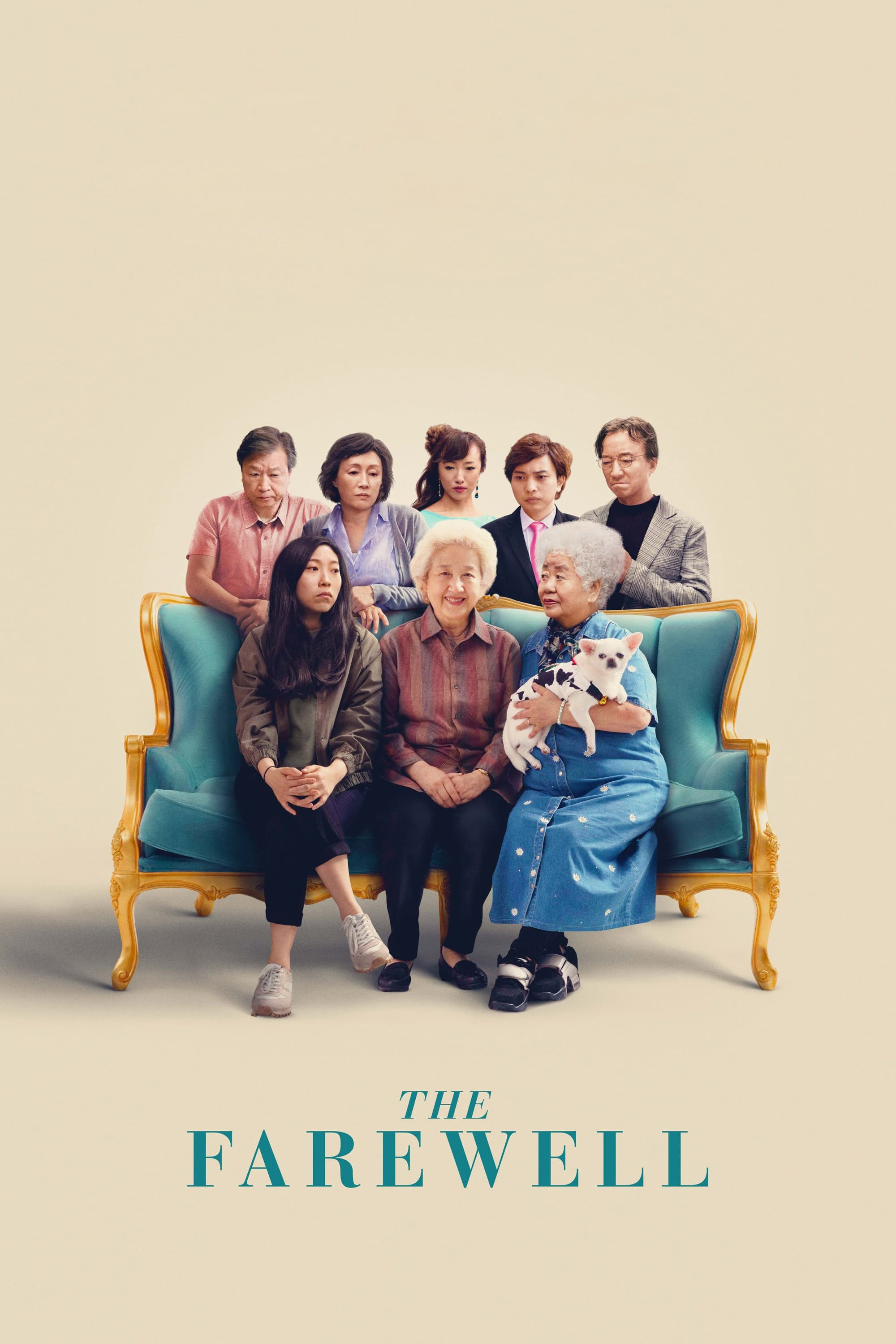
Bilingual family feature expanding radio memoir into Changchun urban and domestic space: Lulu Wang adapts her 2016 broadcast into a dramatic feature following Billi back to Changchun, Jilin, navigating generational and linguistic distance across banquet halls, wedding-photo studios, hospital corridors, and apartment dining tables. Compare directly with "What You Don't Know" on cross-media adaptation and alongside The Wedding Banquet and Song of the Exile on staged weddings and homecoming; curated from distributor and festival documentation without viewing the full film, and dramatic staging represents neither Changchun as a whole nor uniform Chinese family values. Editorial pairing.
Contemporary post-industrial Shenyang Tiexi and crime-memory story collection selection: first published in 2016 (Rye Field traditional edition 2019; Beijing Daily reissue 2021), Shuang Xuetao's ten-story debut uses a 1990s Yanfen Street cold case in its title novella to trace state-factory layoffs and generational scars, forming a cross-media and cross-generational triangle with Ban Yu's Winter Swimming, Wang Bing's West of the Tracks, and Xiao Hong's early Northeast classics. Strictly separates this Chinese collection from the three-novella English edition Rouge Street (2022) and screen adaptations; selected from NBINet and LC records without reading the book in full.
Framed as a combined regional selection across Northeast China (Heilongjiang, Jilin, and Liaoning), this guide focuses on modern frontier history, rural homeland writing completed in Hong Kong exile, multilingual literary encounters, post-industrial urban memory, and transnational family homecomings across Hulan County town, rural Harbin, industrial Shenyang, and Changchun; it strictly distinguishes early-twentieth-century "Manchuria" contexts and Republican-era county towns from contemporary municipal districts (such as Harbin's modern Hulan District) without generalizing any single city, era, or family narrative to the entire region.
Reference points indicate location, not the extent of this selection.