Enter Wuhan through street vendors on Jiqing Street and female carrying-pole porters on Hanzheng Street, then broaden outward to poetry, historic buildings, commercial history, and river floods. Combining fiction, poet interviews, historical essays, and scholarship, the guide traces ordinary lives across urban change.
Automatically aggregated from narrative settings and writing residencies in work records; click to locate in the Spatial Atlas.
Wuhan →Narrative setting works · 8 / Writing residency works · 2Source ↗
The urban scope of Wuhan, including Hankou landscapes explicitly attested in sources; settings across Hankou, Wuchang, and Hanyang in different periods or adaptations are not treated as automatically interchangeable.
Works on this page · 6
All selected works
Explore each work’s connection to a place, with reading reasons and sources.
Compare how local speech enters distinct narrative genres alongside the film Feng Shui and Wuhan literary selections; Beijing International Film Festival notes confirm Wuhan dialect dialogue, though dialect alone does not establish every story location, nor does its crime plot represent the city as a whole.this is an editorial pairing rather than an adaptation or citation link.
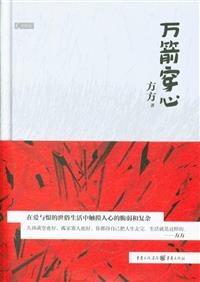
Starting point for Wuhan fiction: read this novella first to encounter urban life through night-market stalls on Jiqing Street, women characters, and everyday relationships, before extending to Wanjian Chuanxin and urban history; keep fictional storytelling distinct from actual neighborhoods.
Follow Life Show with another portrait of women's labor and family strain: Fang Fang links her creation of Li Baoli to female carrying-pole porters on Hanzheng Street. This catalog distinguishes the standalone novella from same-titled anthologies, and readers may also compare the novella with its film adaptation (Feng Shui).
Cover via Open Library · 湖北人民出版社, ISBN 9787216039468. Image rights remain with their holders; this service link is not an open licence or permission to mirror the image.
Gateway to urban historical essays: read the author's reprint afterword first, then select "Hankou's First Avenue" or "Splendid Hanxiesheng" to enter Hankou through architecture, commerce, and personal stories alongside the urban histories below. The 2004 collection is recorded separately from the 2014 edition (which adds an afterword and replaces photographs), and archival photos do not depict present-day streets.
Cover via Google Books · Stanford University Press, ISBN 9780804712040. Image rights remain with their holders; this service link is not an open licence or permission to mirror the image.
Understand nineteenth-century Hankow's urban organization through commerce, merchant migration, and guilds; the Chinese translation pairs well with neighborhood life in Wuhan fiction.
Cover via Google Books · Cambridge University Press, ISBN 9781108417778. Image rights remain with their holders; this service link is not an open licence or permission to mirror the image.
Examine Wuhan's relationship with its rivers through neighborhood survival, epidemic disease, and relief during the 1931 Yangzi River flood; currently cataloged here in its English edition.
Read the poet's reflections on wet markets, stations, alley sounds, and everyday life beneath Yellow Crane Tower to see how urban routines shape poetic cadence. The interview also questions the limits of regional labels, inviting reflection on what it means to "enter a work through a place" without treating all of Zhang Zhihao's poems as Wuhan scenes.
A 2024 Chinese–English bilingual poetry selection by Zhang Zhihao, translated by He Yuemin and published by Foreign Languages Press; seek out the volume after the interview to compare colloquial phrasing with its English rendering. Recommended from publisher blurbs and author interviews without reading the book in full; the linked page is a catalog introduction rather than full text, and individual poem sources and translations remain unverified.
Chinese translation of the author's introduction to William T. Rowe's Hankow: Commerce and Society in a Chinese City, 1796–1889; start here to see how commerce and civic associations shaped the city.
Centers on Wuhan's neighborhoods, rivers, and urban history, with historical studies spanning longer periods; this city-level guide does not stand in for wider regions.
Reference points indicate location, not the extent of this selection.