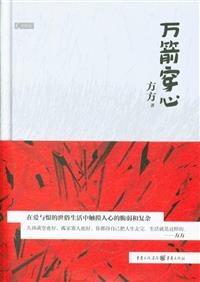
Fang Fang's novella follows Wuhan working-class woman Li Baoli as she shoulders a carrying pole in Hanzheng Street to raise her son after family upheaval, portraying urban labor and domestic strain.
Reading noteFirst published in Beijing Literature (2007, no. 5) and issued in book form by Chongqing Publishing House in July 2013, drawing on female carrying-pole porters in Wuhan's Hanzheng Street; cataloged separately from the 2012 film adaptation Feng Shui.
Sources and record notes
Prepared from the listed sources; not an excerpt or a claim to have read the entire work.
Automatically matched from identifiers and bibliographic metadata without manual review; applies to this publication record only and does not imply full text, loan, or purchase availability.
Scope and boundary note: The urban scope of Wuhan, including Hankou landscapes explicitly attested in sources; settings across Hankou, Wuchang, and Hanyang in different periods or adaptations are not treated as automatically interchangeable.
Scope and boundary note: The urban scope of Wuhan, including Hankou landscapes explicitly attested in sources; settings across Hankou, Wuchang, and Hanyang in different periods or adaptations are not treated as automatically interchangeable.
Compare how local speech enters distinct narrative genres alongside the film Feng Shui and Wuhan literary selections; Beijing International Film Festival notes confirm Wuhan dialect dialogue, though dialect alone does not establish every story location, nor does its crime plot represent the city as a whole.this is an editorial pairing rather than an adaptation or citation link.
Starting point for Wuhan fiction: read this novella first to encounter urban life through night-market stalls on Jiqing Street, women characters, and everyday relationships, before extending to Wanjian Chuanxin and urban history; keep fictional storytelling distinct from actual neighborhoods.
Gateway to urban historical essays: read the author's reprint afterword first, then select "Hankou's First Avenue" or "Splendid Hanxiesheng" to enter Hankou through architecture, commerce, and personal stories alongside the urban histories below. The 2004 collection is recorded separately from the 2014 edition (which adds an afterword and replaces photographs), and archival photos do not depict present-day streets.
Wuhan (The urban scope of Wuhan, including Hankou landscapes explicitly attested in sources; settings across Hankou, Wuchang, and Hanyang in different periods or adaptations are not treated as automatically interchangeable.)
Wuhan (The urban scope of Wuhan, including Hankou landscapes explicitly attested in sources; settings across Hankou, Wuchang, and Hanyang in different periods or adaptations are not treated as automatically interchangeable.)